Customer Opportunity & Engagement Management Platform
Client: Major Canadian Financial Institution
Role: UX&UI Lead
Collaborators: End-Users, UX&UI Designer, Product Owners, Data Engineer, Executive Stakeholders
Objective
Financial Advisors and Branch Managers were spending significant time validating leads across multiple systems — a manual, fragmented process that slowed their ability to act on customer opportunities. I led the design of an analytics-enabled platform built around how advisors actually work, translating that research directly into the data and interface requirements.
The Design Process & Delivery
I led the team through a rapid co-design process — moving from user research to validated BI requirements in a compressed timeline.
User Research: I conducted interviews to understand how Financial Advisors track and prioritize sales opportunities — surfacing the specific data points that mattered most in their daily work, and the gaps that were costing them time.
Defining What the Platform Needed to Do: I translated those findings directly into analytics modelling requirements — ensuring the solution was grounded in real user behaviour, not assumed data needs.
User Story Mapping: We mapped User Stories detailing KPIs and data interactions, which gave the development team a clear picture of what to build.
Technical Validation: My team produced detailed wireframes before development hand-off — validating both user requirements and data availability with the engineering team.
Outcome
By designing around how advisors actually worked, not how the data was structured, we delivered a platform they trusted and used. The result was a single, streamlined view of lead prioritization and performance metrics that reduced manual effort and improved the quality of customer engagement decisions.
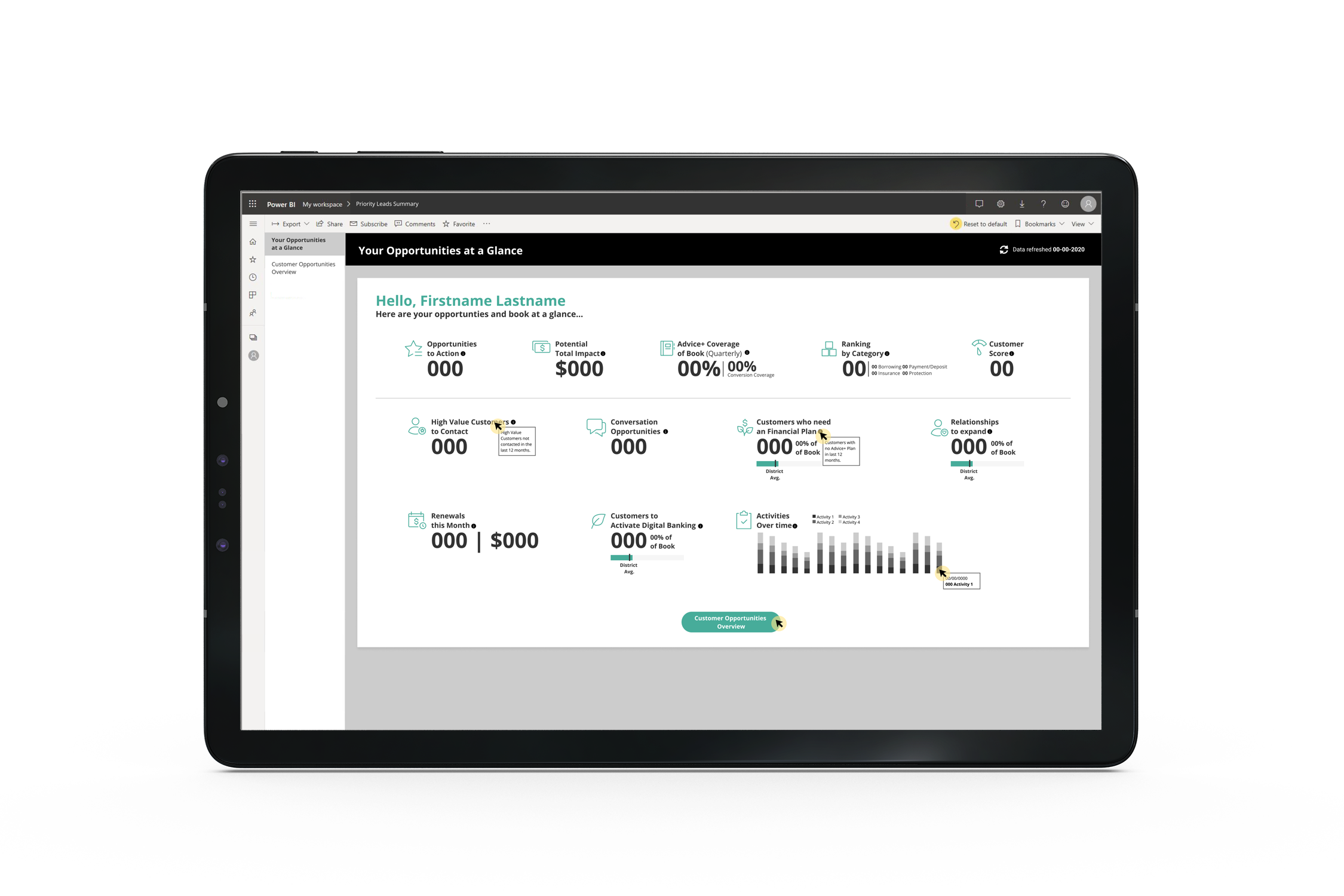
The landing page surfaces high-level performance metrics first — giving users a clear picture of overall health before drilling into detail.
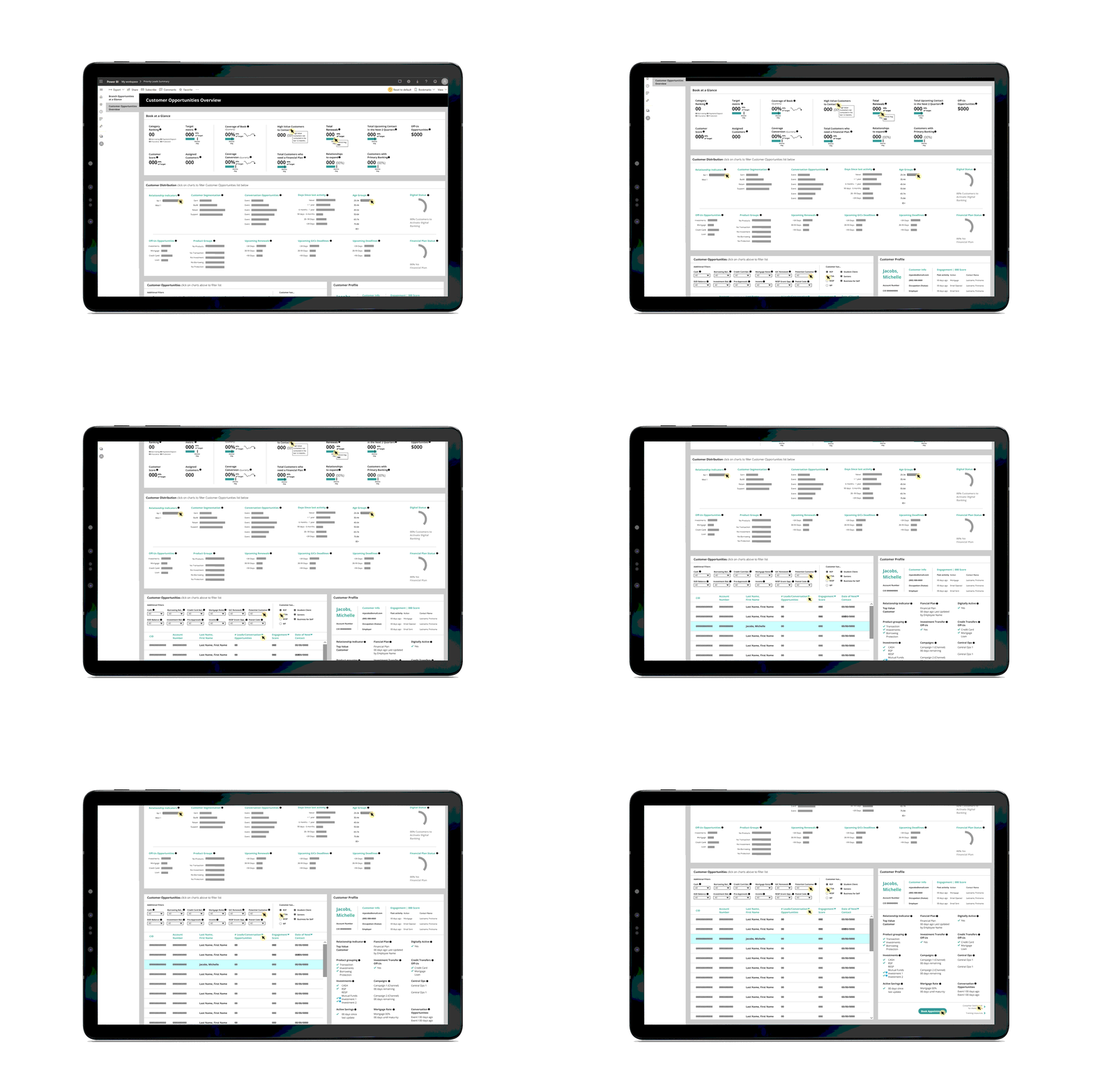
High-fidelity wireframes optimized for development hand-off — ensuring a clear, accurate transition from design to production.
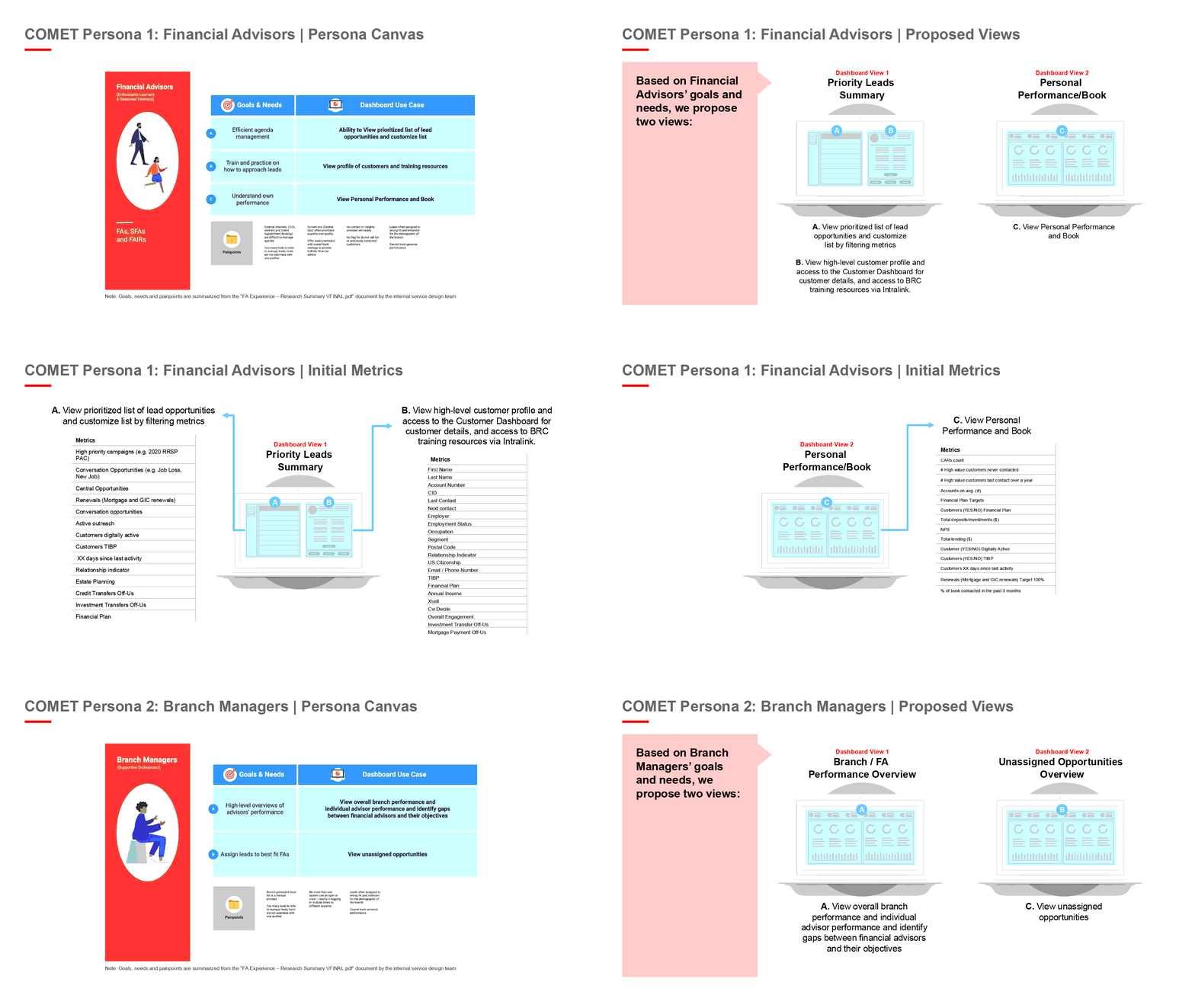
Information architecture aligned daily tasks with business goals — tailored to the distinct needs of managerial and operational users.