Salesforce CRM Agenda Management Workflow Optimization
Client: Major Canadian Financial Institution
Role: UX/UI Design Lead
Collaborators: End-Users, UX/UI Designers, Functional Design Team, Product Design Team, Product Owners, Engineering Team, Executive Stakeholders
Objective
Following a Salesforce rollout, Financial Advisors were avoiding the new appointment workflow — adoption was low and the friction was measurable. I led the redesign of this high-traffic process, working within strict budget constraints to maximize Salesforce's native capabilities and minimize custom development.
The Design Process & Delivery
I led the UX/UI design stream end-to-end, from user research through to final delivery.
Deep User Empathy: We conducted intensive "day-in-the-life" sessions with FAs to clarify undocumented agenda management processes and synthesize their daily motivations and pain points.
Blueprint for Prioritization: We established foundational artifacts including Personas, JTBD, and Process Mapping to define the blueprint for MVP 2 features.
Rapid Validation: Using the Salesforce Lightning Design System, we produced iterative wireframes and prototypes to validate requirements before committing to development.
Designing Within Constraints: By anchoring non-negotiable workflow steps to out-of-the-box Salesforce features, we kept the design within budget without sacrificing the core user experience.
Outcome
The redesign delivered a more intuitive appointment experience for Financial Advisors — improving workflow efficiency and driving adoption of the platform.
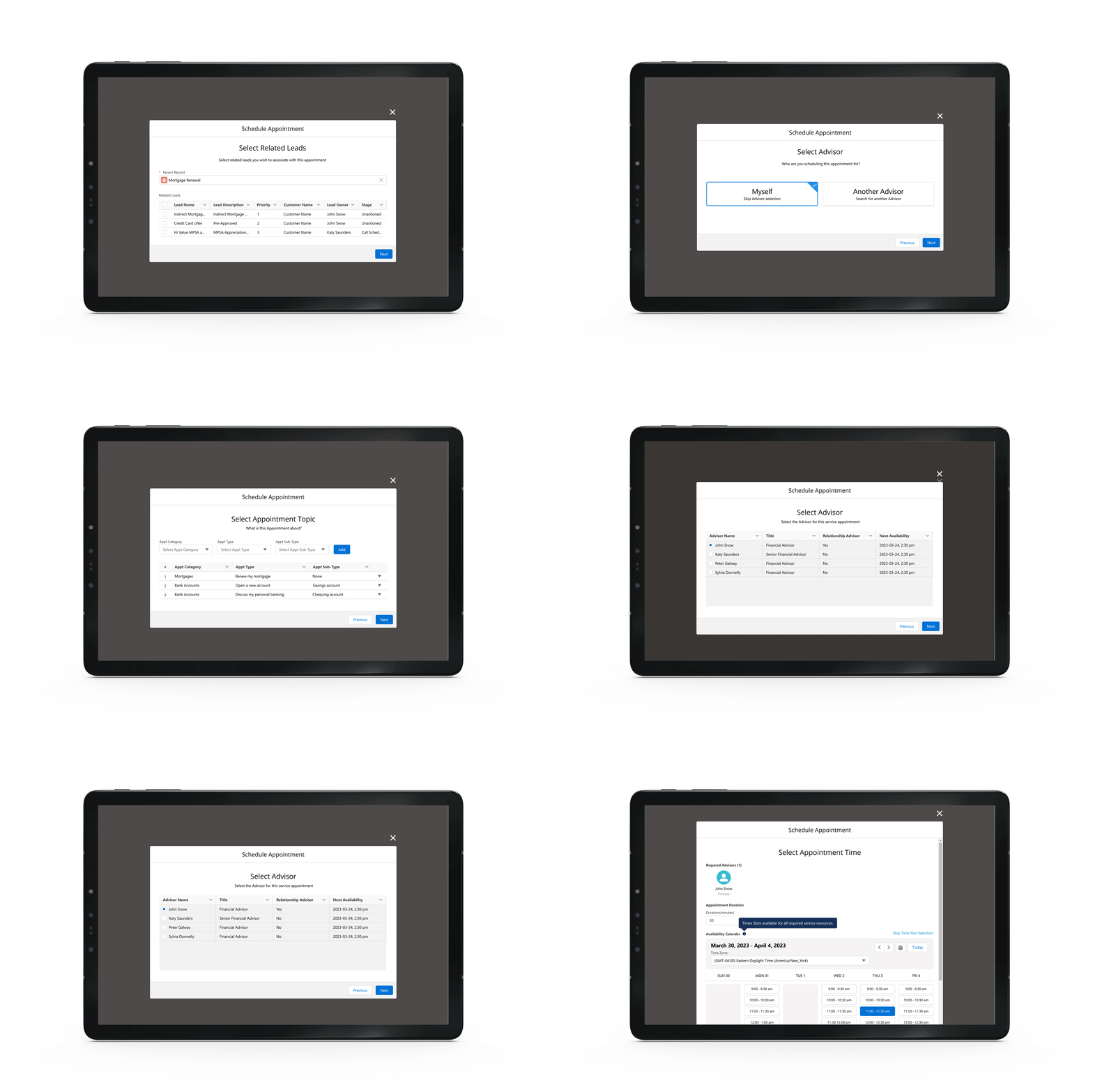
Multiple scenarios were mapped before arriving at the final booking flow. My team used Salesforce's Lightning Design System for rapid prototyping and validation.
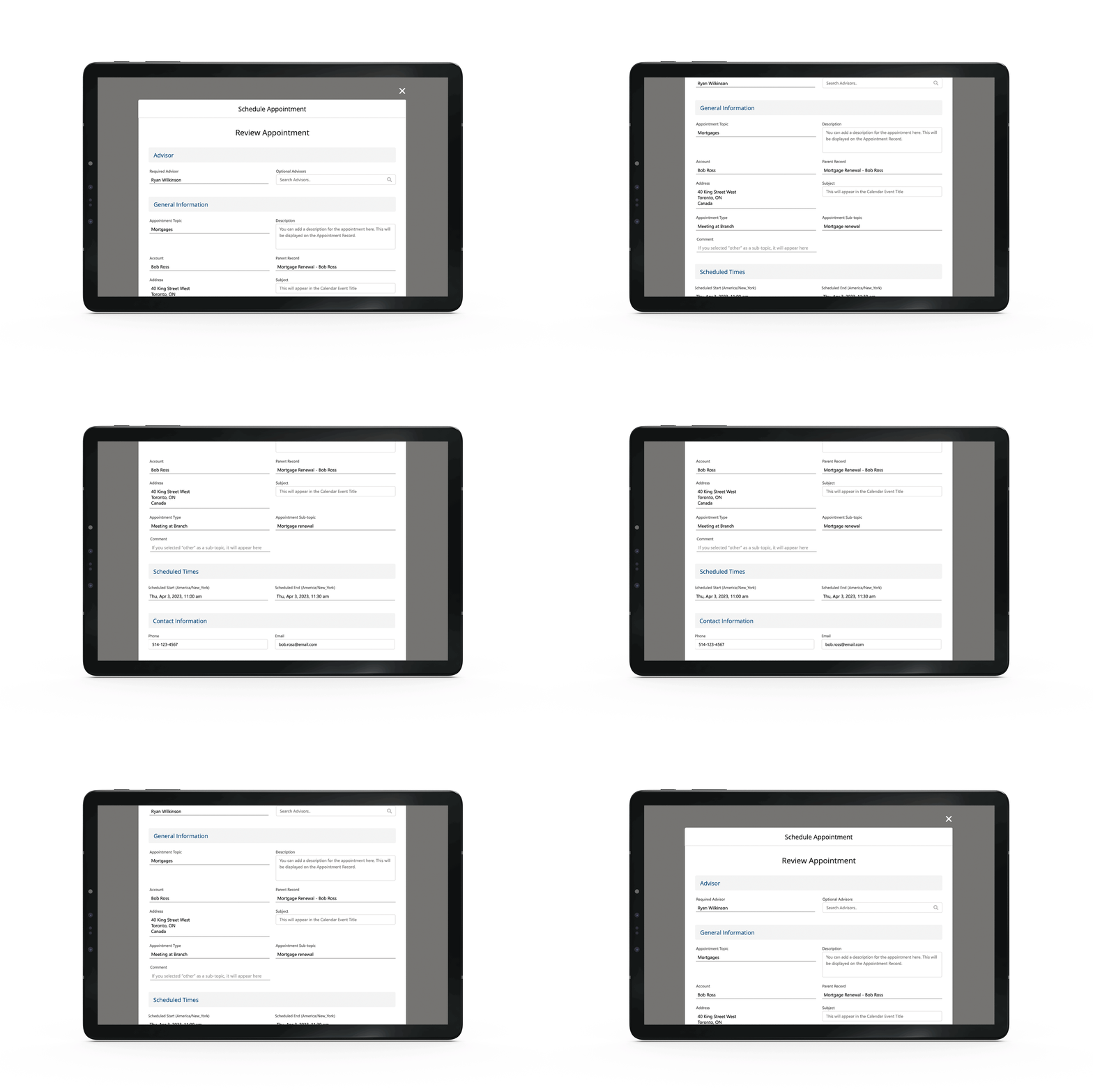
The confirmation screen fields were designed directly with end users — balancing optimal workflow against the cost of custom development.
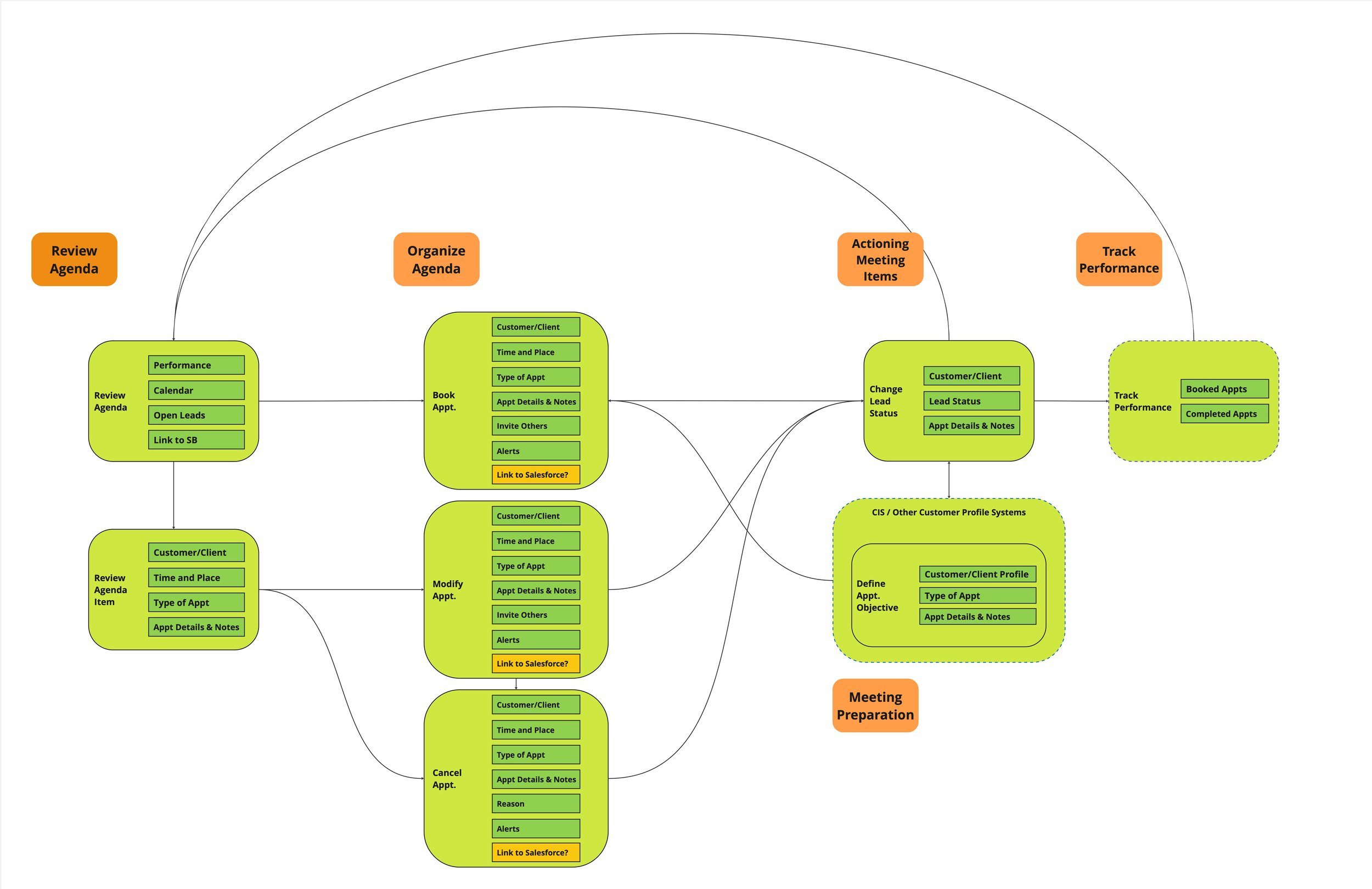
Initial user flow mapping developed from Jobs-to-be-Done — grounded directly in interview sessions with Financial Advisors.
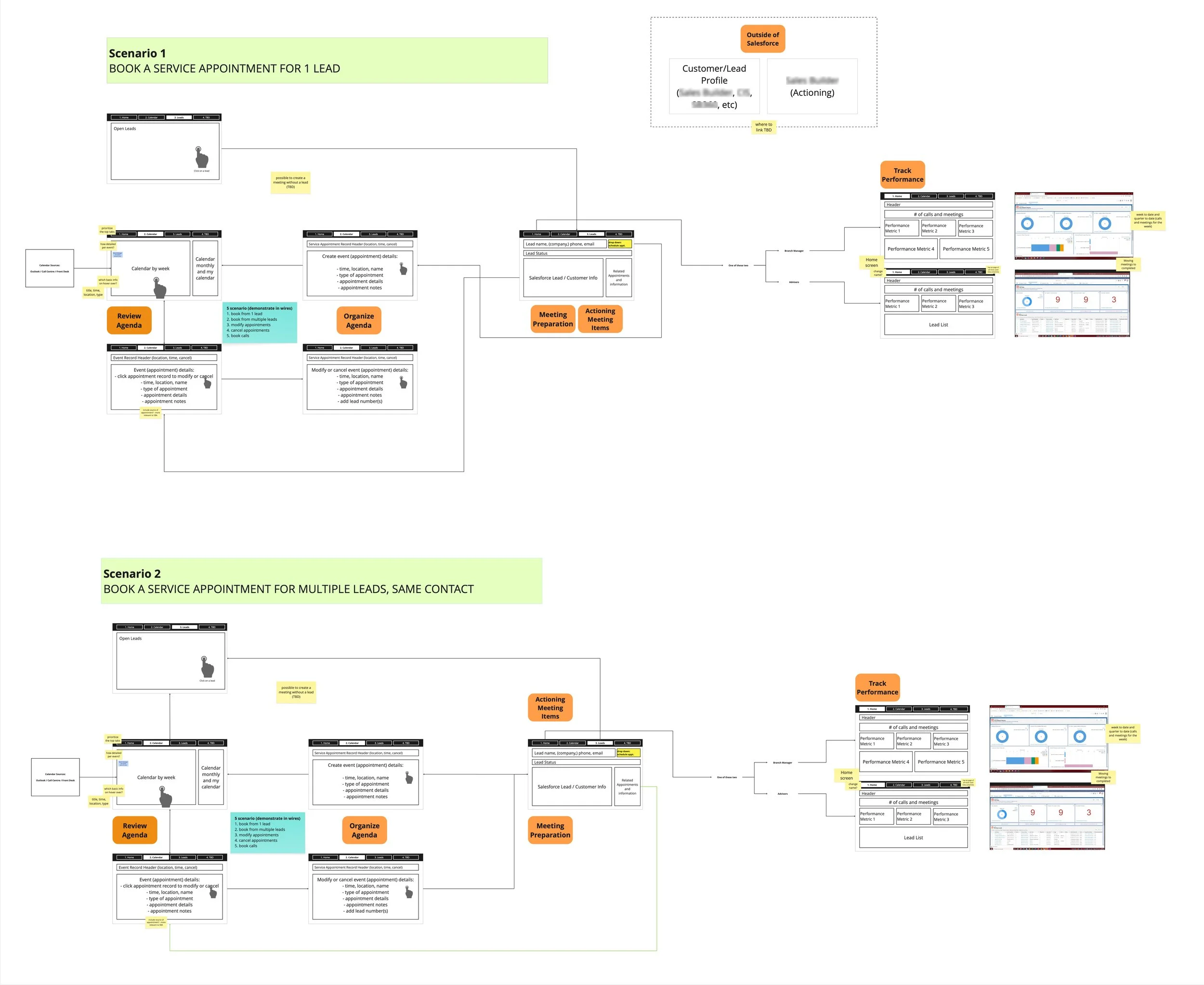
Different scenarios explored with users after initial interviews — each informing the final design decisions.