UTSC Commons Magazine Editorial Design System
Client: University of Toronto Scarborough
Studio: Hambly & Woolley
Collaborators: Editorial Team, University Communications, Photographers, Illustrators.
Role: Lead Editorial Designer
CD: Barb Woolley
Kenneth R. Wilson Memorial Award
The Objective
The University of Toronto Scarborough needed an editorial system built from the ground up for their flagship publication — one that could make complex academic content accessible and engaging for alumni, donors, and the broader community.
The Design Process & Delivery
I led the foundational design, working closely with the creative director and editorial team to ensure the visual system was fully integrated with the content strategy.
Collaborative Content Creation: I closely worked with the editorial team including a few workshops to define the publication’s sections and "voice." Together, we identified how to structure stories to move from high-level academic concepts to human-interest narratives.
Editorial Information Architecture: I developed a grid system and modular layout that allowed for visual variety while giving the publication a consistent structure, a reliable framework for everything from quick community highlights to long-form feature stories.
Visual Synthesis of Academic Work: I developed a visual language using bold typography and considered information design to make academic achievements feel accessible and worth reading, not just worth filing.
The Outcome
We launched a cohesive editorial system that transformed the publication into a high-value tool for university advancement. The magazine gave academic stories the design quality they deserved and made them a genuine driver of donor engagement and community connection. Recipient of the Kenneth R. Wilson Memorial Award.

Editorial system built from the ground up — type hierarchy, grid, and visual language established to work across every issue.

Modular layout system designed to accommodate a wide range of story lengths and formats within a consistent visual framework.
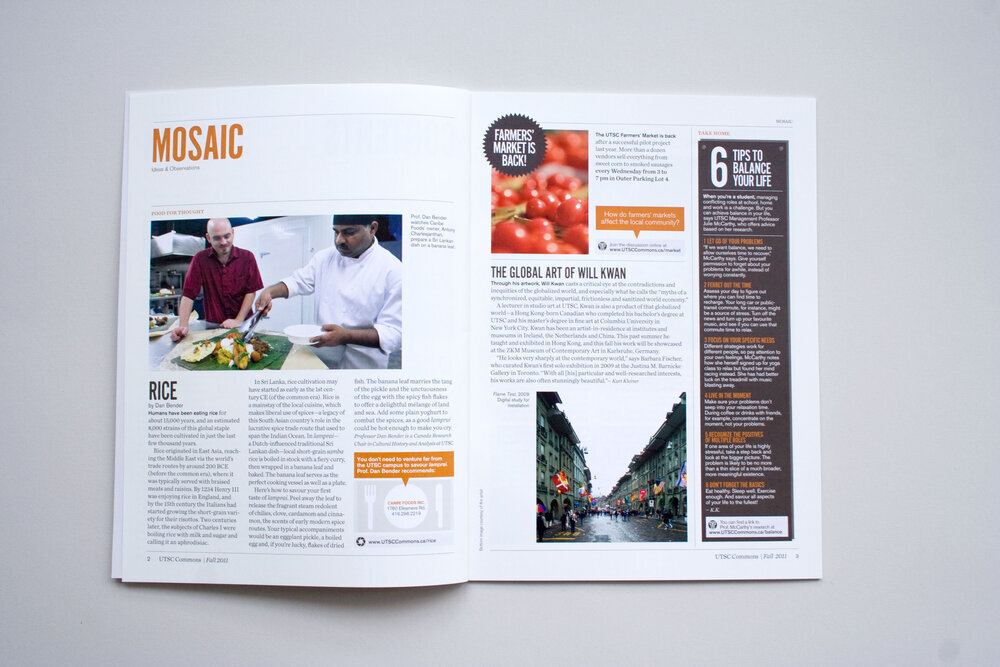
Bold typography and information design used to make complex academic work feel accessible and visually compelling.
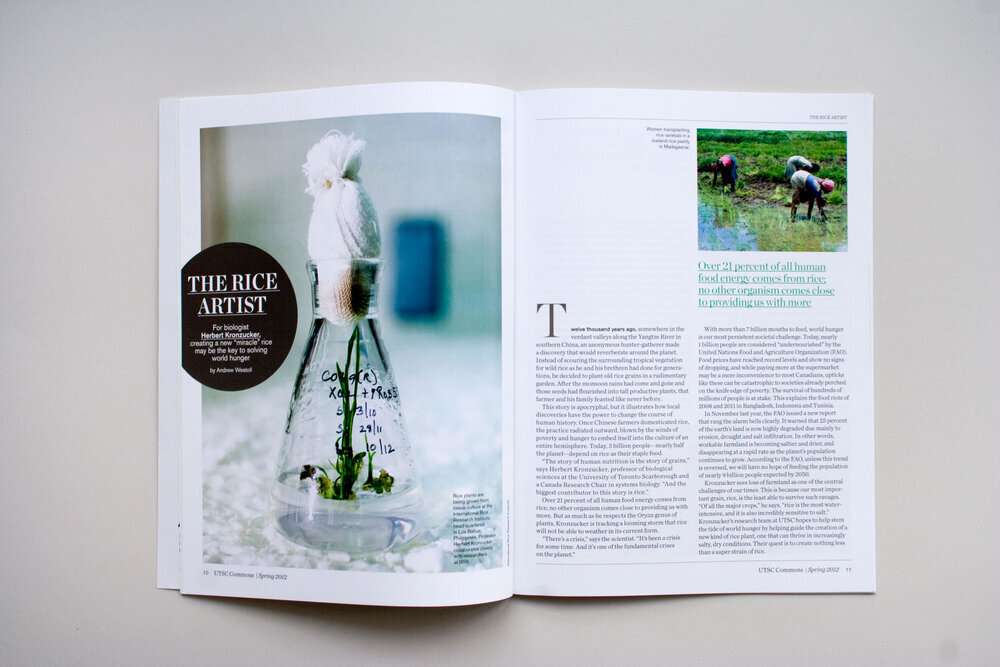
The system's flexibility — same grid, different visual treatment — allowing each story to feel distinct while staying cohesive.