ROM Magazine Strategic Editorial Design
Client: Royal Ontario Museum
Studio: Hambly & Woolley
Role: Lead Designer & Art Director
CD: Barb Woolley
Collaborators: Museum Curators, Editorial Team, Scientific Researchers, Production Manager.
National Magazine Awards Nomination
The Objective
The objective was to elevate the ROM’s quarterly publication into a primary vehicle for membership engagement and donor retention. The challenge was to take "hard-to-digest" scientific and historical research—the deep work that happens behind the scenes—and translate it into a visually intriguing narrative. We aimed to reveal the extensive research and discovery process that leads to major exhibits, fostering a closer, more personal connection between museum members and the institution's academic mission.
The Design Process & Delivery
I led the visual storytelling strategy, focusing on making the "invisible" work of researchers tangible and fascinating through sophisticated information design.
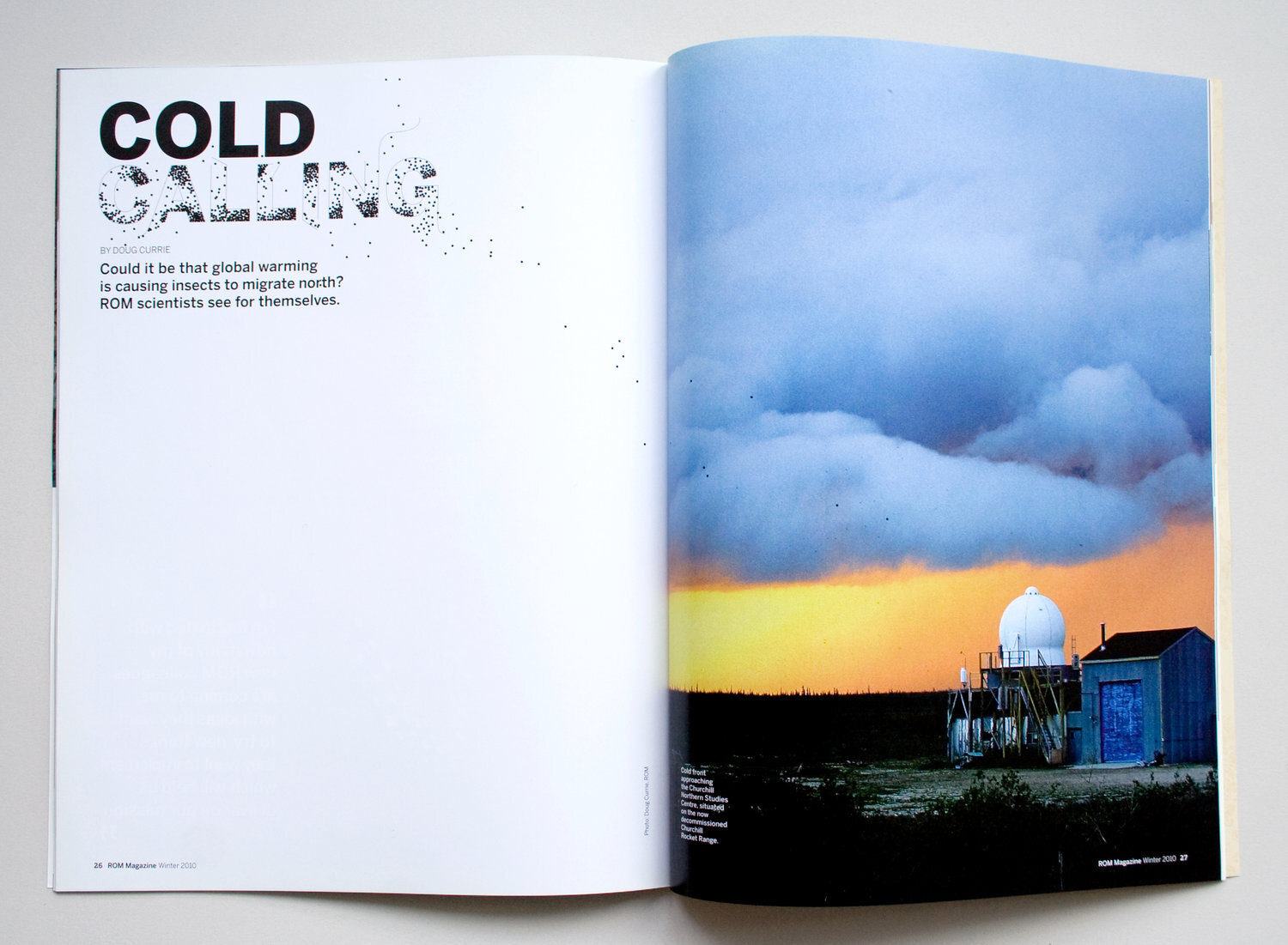
Curatorial Translation: I worked closely with curators and scientists to identify the most compelling aspects of their findings. I translated these complex research papers into accessible "visual deep-dives," using custom layouts to highlight the moments of discovery.
Bridging the Research-to-Exhibit Gap: To address the lack of member awareness regarding the museum’s research, I developed a structural framework for the magazine that explicitly connected laboratory findings to the artifacts seen in the galleries. This created a sense of "insider access" for the reader.
Elevated Visual Craft under Constraints: Similar to the TMU and UTSC projects, I navigated production constraints by utilizing high-end typography and rhythmic pacing to create a premium, "collector’s item" feel. This ensured that the publication felt as valuable as the artifacts it showcased.
The Outcome
The redesigned magazine successfully repositioned the ROM's research as a central benefit of membership. By uncovering the "hard work" behind the exhibits, the publication fostered a deeper sense of member loyalty and appreciation. The result was a highly praised strategic communication tool that transformed dense information into a primary driver of institutional connection.